Dental Implants Calabasas CA: From Consultation to Final Crown
Losing a tooth changes more than a smile. It changes the way food feels, the way words come out, and often the way a person carries themselves in conversation. I have seen patients adapt in surprisingly creative ways, chewing only on one side, smiling with a closed mouth, or choosing softer foods without even realizing how much they have narrowed their routine. Dental implants can reverse much of that loss, but the process works best when people understand what actually happens between the first consultation and the day the final crown is seated.
For anyone researching Dental Implants Calabasas CA, the real questions are usually practical. How long does it take? What hurts? Who is a good candidate? Why does one case move quickly while another takes months? Those answers depend on anatomy, health history, bone quality, and the treatment plan itself. A single front tooth after a sports injury is very different from replacing a molar that has been missing for years. Still, the broad path is consistent, and understanding that path helps patients make better decisions and avoid false expectations.
What a dental implant really is
A dental implant is not just the visible tooth. It is a system with three parts. The implant fixture, usually made of titanium or a titanium alloy, is placed in the jawbone. An abutment connects the implant to the restoration. The crown is the part that looks and functions like a tooth above the gumline.
That distinction matters because each part has its own timing and purpose. People often say, “I’m getting an implant,” when they mean the entire replacement. In practice, the implant itself goes into the bone first, then the site heals and integrates, and only after that does the custom crown get finalized. In some cases a temporary tooth is placed much earlier, which can make the process feel faster cosmetically even though the biology still needs time.
A strong implant case is not just about putting in hardware. It is about matching the implant size and position to the bite, the gum architecture, the bone contours, and the esthetic demands of the area. A back molar has to absorb heavy chewing force. A front tooth has to look natural under changing light, frame the lip line, and emerge from the gum in a way that does not appear flat or bulky. Good planning shows up later as comfort and longevity.
The consultation is where most of the important decisions happen
The first visit sets the direction for everything that follows. A proper implant consultation is part diagnosis, part planning session, and part reality check. This is where the dentist or specialist evaluates whether an implant is the best option, whether bone grafting is needed, and whether the timing can be immediate, early, or delayed.
At this appointment, the exam usually includes a discussion of medical history, current medications, gum health, past dental work, and the reason the tooth is missing or failing. A failed root canal, a vertical fracture, advanced periodontal disease, and traumatic injury each create different starting conditions. A patient who lost a tooth last month often has a different bone and soft tissue picture than someone who lost one ten years ago.
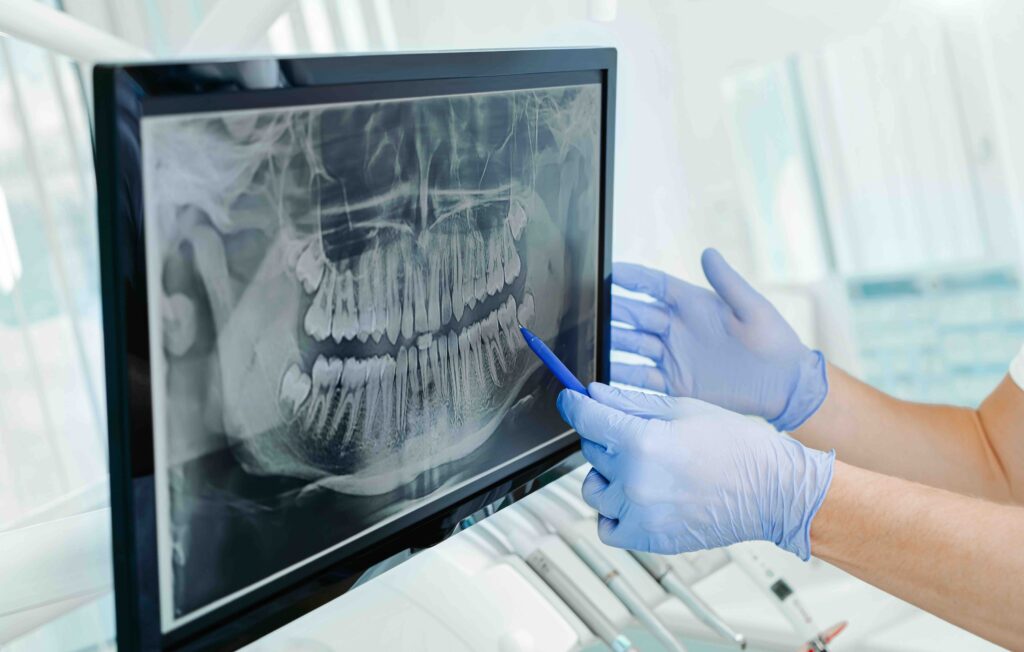
Imaging is central here. Standard dental X-rays provide useful information, but a cone beam CT scan often gives the detail needed for implant planning. It shows bone width, bone height, nerve location in the lower jaw, sinus position in the upper back jaw, and hidden anatomy that a two-dimensional image can miss. When patients hear that a three-dimensional scan is recommended, they sometimes assume it is an upsell. In reality, it often prevents avoidable surprises.
This is also the point where expectations should become specific. If a patient wants the fastest path to replacing a visible front tooth before an upcoming wedding or work event, the dentist has to weigh esthetics against healing stability. If someone clenches heavily at night, the plan may need a night guard and careful bite management from the start. If the bone has narrowed after years without a tooth, grafting may be the smartest route even if it extends the timeline.
A good consultation should leave you with a clear sense of four things:
- whether you are a straightforward candidate or a more complex one
- whether the tooth needs extraction, grafting, or sinus work before implant placement
- the expected timeline from surgery to final crown
- the financial range and what portion may or may not be covered by insurance
Those four points sound basic, but they prevent most of the confusion that leads to frustration later.
Who tends to be a good candidate
Many adults qualify for implants, but “healthy enough” is not the same as “ideal conditions.” The best candidates generally have stable gums, adequate bone, and a medical profile that allows predictable healing. Smoking, uncontrolled diabetes, active periodontal disease, and certain medications can raise the risk of complications. That does not automatically rule out treatment. It simply means planning has to be more careful.
Bone quality matters more than people expect. The lower front jaw often has dense, reliable bone. The upper back jaw can be softer and may sit close to the sinus, which is why sinus augmentation sometimes enters the conversation for upper molar implants. Patients are often surprised to learn that the site of the missing tooth influences the whole plan as much as their age does.
Age alone is rarely the deciding factor. I have seen healthy older adults heal beautifully and younger adults struggle because they smoke, grind aggressively, or neglect maintenance. The mouth rewards consistency more than birthdays.
When a tooth still needs to come out
Sometimes the consultation happens before the tooth is removed. That can be a useful moment because the dentist can evaluate whether immediate implant placement is possible. If the tooth is non-restorable but the surrounding bone walls are mostly intact and the infection is controlled, it may be possible to extract the tooth and place the implant in the same surgical visit. This can shorten treatment and help preserve tissue contours, especially in the esthetic zone.
Immediate placement is appealing, but it is not always the best answer. A large infection, thin bone, active swelling, or poor initial stability can make delayed placement safer. Patients often hear “same-day implant” and assume it is the modern standard. In reality, the standard is whatever gives the highest chance of long-term success. Fast is only valuable when it is biologically sound.
If the extraction site is not ready for an implant, the dentist may place a bone graft at the time of extraction to preserve the ridge. This is common. Once a tooth is removed, the body begins remodeling the bone. Some shrinkage is expected, and in certain areas that shrinkage can be significant. Preserving the ridge early can make later implant placement far easier and more esthetic.
Bone grafting sounds intimidating, but it is routine in many cases
Bone grafting carries a dramatic name for something that is often straightforward. The goal is to rebuild or preserve enough bone to support an implant in the right position. The amount of grafting can range from minor socket preservation after extraction to a larger ridge augmentation or sinus lift.
The reason this matters is mechanical and cosmetic. An implant should not merely fit into available bone like a peg into a hole. It should be placed where the final crown needs to emerge naturally and where the implant can withstand force. If the bone is too thin and the implant is tucked inward just to find support, the final tooth can look off, clean poorly, or receive unhealthy forces.
Healing times after grafting vary. A small preservation graft might need a few months. Larger grafts may require more. That can test a patient’s patience, especially when the missing tooth is visible, but controlled healing often pays off in the quality of the final result.
The day of implant surgery
For most single-tooth implants, placement is Dental Implants Calabasas CA an outpatient procedure done under local anesthesia, sometimes with oaksdentistry.com Dental Implants Calabasas CA oral sedation or IV sedation depending on the case and the patient’s comfort level. The surgical experience is usually easier than people imagine. The mental picture tends to be worse than the actual appointment.
If the site is healed, the dentist reflects the tissue or uses a guided approach, prepares the osteotomy in stages, and inserts the implant with measured torque. Precision matters at every step. Too much heat during drilling can damage bone. Poor angulation can compromise the crown. Inadequate initial stability may require a longer healing period before the implant is loaded.
The immediate postoperative period tends to involve soreness, not drama. Most patients describe the first evening as manageable with prescribed or recommended medications, cold compresses, and a soft diet. Swelling varies by location and surgical complexity. A simple single implant often causes far less disruption than a difficult extraction.
Patients commonly ask whether they will leave with a tooth. Sometimes yes, sometimes no. In a visible area, a temporary removable appliance or a temporary implant crown may be used, but only if it will not jeopardize healing. A temporary that looks good but overloads a fresh implant is a poor trade.
Healing and osseointegration, the part no one can rush
The biological bond between implant and bone is called osseointegration. This is the phase that determines whether the implant becomes a stable long-term foundation. While the process is often described in simple terms, it is doing a lot in the background. Bone cells remodel around the implant surface, replacing early mechanical stability with living biological support.
This phase usually takes a few months, though the range depends on bone density, implant stability at placement, grafting, and whether the implant was placed immediately after extraction. Denser bone can support faster timelines in some cases. Softer bone often needs more patience.
This is where problems can arise if a patient feels fine too soon and resumes normal chewing on the area prematurely. Pain is not the only signal that matters. An implant can be overloaded without dramatic symptoms, especially if the patient grinds or chews hard foods on a temporary restoration. The mouth can be deceptively forgiving until it is not.
A few basic aftercare habits make a real difference:
- keep pressure off the implant site as instructed
- use prescribed rinses or hygiene tools consistently
- avoid smoking during healing, ideally well beyond it
- attend follow-up visits even if everything feels normal
- report unusual mobility, swelling, or persistent pain promptly
That list may look simple, but I have seen excellent surgery undermined by careless healing habits more than once.
What the second stage may involve
Not every implant needs a second-stage surgery, but many do. If the implant was placed below the gum tissue and covered to heal undisturbed, a later visit uncovers it and places a healing abutment. This small component shapes the gum and creates access for the restorative phase. The appointment is usually brief and much easier than the original surgery.
This soft tissue stage is easy to underestimate. The contour of the gum around the future crown influences how natural the final result appears and how easy it will be to clean. In the front of the mouth, details here matter enormously. Two crowns can be identical in ceramic quality, yet the one with well-managed soft tissue will look more lifelike.
Taking impressions, matching color, and designing the final crown
Once the implant is stable and the gums are healthy, the case shifts from surgical to restorative. This is where records are taken for the final crown. Depending on the office and the specifics of the case, that may involve digital scanning, traditional impressions, photographs, bite records, and shade selection.
For anterior teeth, shade matching is more complicated than choosing “white.” Real teeth carry translucency, texture, subtle internal color variation, and light reflection patterns. A central incisor that is too opaque or too bright can stand out immediately, even if the average observer cannot explain why. In Calabasas, where appearance often carries professional and social weight, this part of treatment gets a lot of rightful attention.
Back teeth pose a different challenge. They need strength, occlusal accuracy, and contact points that do not trap food. A crown that is slightly high can make the whole side of the jaw feel wrong. A contact that is too open can lead to food impaction and irritated gums. Precision at delivery matters just as much as beauty.
The crown may be screw-retained or cement-retained depending on the case. Screw-retained crowns are often favored because retrievability is useful and excess cement around implants can be problematic if it remains under the gum. Cement-retained crowns still have their place, but they demand care and clean technique.
The day the final crown goes in
Patients often expect the final crown appointment to feel ceremonial, but it is usually calm and technical. The restoration is tried in or seated, fit is confirmed, contacts are checked, and the bite is refined. The dentist will verify that the crown is not taking too much force, especially in lateral movements. A well-integrated implant does not have the same shock-absorbing periodontal ligament that a natural tooth has, so bite design matters.
When the implant replaces a front tooth, the emotional shift can be immediate. I have watched people look in the mirror and visibly relax their lips for the first time in months. When it replaces a molar, the reaction is usually more functional than emotional, often some version of, “I can finally chew on that side again.” Both responses are important. One restores confidence, the other restores daily life.
Still, the crown appointment is not the end of responsibility. An implant can last many years, but it is not maintenance-free. The tissues around it can become inflamed, and the restoration can chip, loosen, or wear if the bite is unfavorable or hygiene is poor.
How long the full process usually takes
This is the question almost every patient asks first, and the honest answer is that timelines vary. A straightforward case with a healed site and good bone may move from consultation to final crown in a few months. A case involving extraction, grafting, and staged healing can take significantly longer, often several months more. If esthetics are demanding, there may be additional refinement steps.
That timeline can feel slow in a culture that expects quick fixes, but implant dentistry is closer to orthopedics than cosmetics in one key way. Biology sets the pace. The body needs time to knit bone to implant and shape tissue around the restoration. Trying to outrun that process usually creates more delay, not less.
What can complicate treatment
Most implant cases go well, but complications are real and worth discussing plainly. Inadequate bone integration, infection, soft tissue recession, poor implant position, sinus issues in upper posterior cases, and mechanical problems with screws or restorations can occur. Bruxism deserves special mention. Night grinding can overload both implants and crowns, and patients who dismiss their clenching habits sometimes learn that lesson the expensive way.
There is also the question of adjacent teeth. Sometimes a patient focuses so much on the missing tooth that they overlook active gum disease or unstable neighboring teeth. An implant placed into a poorly maintained mouth enters a bad neighborhood, so to speak. Long-term success improves dramatically when periodontal health is addressed first.
A thoughtful provider will discuss these risks without turning the consultation into a scare session. The goal is not to create fear. It is to make the patient an informed participant.
Cost, value, and why estimates can vary so much
When people compare fees for Dental Implants Calabasas CA, they often think they are comparing the same treatment across offices when they are not. One estimate may include the extraction, graft, implant, abutment, crown, and imaging. Another may quote only the surgical implant. The materials, lab work, imaging, sedation, and specialist involvement can all change the number.
Value in implant dentistry is not the cheapest figure on paper. It is the quality of diagnosis, planning, placement, restoration, and maintenance. A less expensive implant placed in a compromised position can cost far more to correct than a carefully planned case done right the first time. That does not mean the highest fee is automatically the best. It means patients should understand what is included and how the case will be managed from start to finish.
Insurance may help with parts of treatment, particularly extractions or crowns in some plans, but coverage for implants remains inconsistent. That is another reason a written treatment plan matters.
Living with an implant after the case is complete
A well-made implant should become boring in the best possible sense. It should not dominate your attention. You should be able to chew, speak, smile, and clean your teeth without constantly thinking about it. That is the benchmark many patients actually care about.
Home care is slightly different from caring for a natural tooth, but not dramatically so. The focus is on protecting the gum seal and controlling plaque around the implant. Floss, interdental aids, water flossers, and tailored hygiene instruction can all help, depending on the crown shape and tissue contours. Regular professional maintenance remains important because peri-implant inflammation can advance quietly.
I often tell patients that the final crown is not the finish line, it is the handoff. The dentist builds the replacement, but the patient determines much of its lifespan through daily habits. Good brushing and cleanings are part of that. So is wearing a night guard if one is recommended. So is avoiding the urge to test your new tooth on ice, nutshells, or the kind of sticky candy that challenges every restoration ever made.
Choosing the right office for the journey
People understandably focus on technology, and technology does matter. Three-dimensional imaging, guided planning, digital scanning, and quality laboratory support can improve accuracy and communication. But the best outcomes usually come from a combination of tools and judgment. Experience shows up in the subtle calls, when to graft, when to delay, when to use a temporary, when to change implant diameter, when to protect esthetics over speed.
If you are exploring Dental Implants Calabasas CA, pay attention to how the office explains the process. Are they clear about timing? Do they discuss alternatives such as bridges or removable options when appropriate? Do they evaluate your gums and bite, not just the empty space? Do they seem more interested in getting the case started than in making sure the foundation is right? Those answers tell you a great deal.
Dental implants are one of the most reliable tooth replacement options available when they are properly planned and maintained. The path from consultation to final crown is not instant, but it is purposeful. Each phase has a job to do, and when those phases are respected, the result can feel remarkably close to getting a part of life back.
Oaks Dental
5000 Parkway Calabasas, Suite 308
Calabasas, CA 91302, United States
Phone: +1 (818) 412-8349
FAQ About Dental Implants Calabasas CA
How much does a dental implant cost in California?
Costs vary with the number of teeth replaced, restoration type, imaging, and any extractions or bone grafting. Request an itemized estimate after an examination; a single advertised price may not include every treatment stage.
Can people with autoimmune disease get dental implants?
Some people may qualify, but the condition, medications, oral health, and healing risks require individual assessment. Share your medical history with your dentist, who may coordinate with your treating physician.
Can you have dental implants if you have osteopenia?
Osteopenia does not by itself establish whether implants are suitable. Your dentist must evaluate jawbone support and review bone-related medications and other risks before recommending treatment.
Corrections
Spot something wrong? Send it to the desk and it gets fixed in the open.