How Bone Grafting Supports Dental Implants in Calabasas CA
A dental implant looks simple once it is finished. You see a natural-looking tooth, it feels stable when you chew, and most people around you never realize anything was replaced. What patients do not always see is the foundation that makes that result possible. In many cases, that foundation includes bone grafting.
For patients considering Dental Implants Calabasas CA, bone grafting often becomes part of the conversation when there is not enough healthy jawbone to support an implant securely. That can sound intimidating at first. It should not. Bone grafting is one of the most practical tools modern implant dentistry uses to rebuild support where bone has thinned, collapsed, or never developed fully in the first place.
The key point is straightforward. A dental implant needs enough bone around it to hold it firmly over time. If that support is weak, the implant is at a much higher risk of failure, poor positioning, gum recession, and cosmetic compromise. Bone grafting helps correct those conditions before or during implant placement so the final restoration has a better chance of lasting.
Why jawbone matters so much for dental implants
An implant is not like a bridge that rests on neighboring teeth, and it is not like a removable denture that sits on the gums. An implant is placed into the jawbone, where it acts like an artificial tooth root. Over time, the bone heals around the implant surface in a process called osseointegration. When that process goes well, the implant becomes anchored in a way that can tolerate normal biting forces.
That only works if the implant is surrounded by enough quality bone. Think of setting a fence post. A post placed into shallow, crumbling soil may stand for a little while, but it will not hold up the same way as one set deeply into firm ground. The same principle applies in the mouth. The implant needs depth, width, and density.
In real practice, bone loss is common. Patients often assume they can lose a tooth, wait a few years, and then place an implant whenever they are ready. Sometimes that works. Often, it does not work as cleanly as they hoped because the body begins reshaping the jawbone almost immediately after tooth loss. Without the stimulation of a tooth root, the bone in that area starts to shrink. It is a normal biological response, but it creates problems for implant planning.
How bone loss happens after a tooth is lost
The timeline varies from patient to patient, but the pattern is familiar. Once a tooth is removed or lost, the bone that used to support it starts to resorb. The width of the ridge tends to shrink first. Height can also decrease over time. In the upper back jaw, the sinus cavity can enlarge downward into the space where roots once were, which reduces available bone for implants. In the lower jaw, bone may narrow enough that ideal implant placement becomes difficult.
I have seen this in patients who were told years earlier that replacing a tooth was optional and could wait indefinitely. Technically, they could wait. Biologically, the site was changing the whole time. A small delay might mean a simple implant later. A longer delay can turn that same case into one that needs grafting, sinus augmentation, or a more complicated restorative plan.
Bone loss is not caused by extraction alone. Periodontal disease can destroy supporting bone before a tooth is ever removed. Infection at the root tip can eat away at the surrounding socket. Trauma can fracture or compress the bone. Some patients simply have thinner anatomy in certain areas. Dentures can add another layer of gradual resorption because they do not stimulate the bone the way natural roots or implants do.
What bone grafting actually does
Bone grafting gives the body a scaffold and signal to rebuild where support is lacking. That description is more accurate than the common fear-based version patients sometimes imagine. A graft is not a random filler. It is placed strategically to preserve or increase bone volume so an implant can be positioned where it should be, not just where bone happens to remain.
Depending on the material and technique used, the graft can help maintain the shape of a fresh extraction socket, widen a narrow ridge, build up lost height, or support the sinus floor in the upper jaw. Over the healing period, the body remodels the site. Some of the grafted material may remain as a framework, and some is replaced by the patient’s own bone.
The goal is not simply “more bone.” The goal is usable, stable bone in the correct three-dimensional position. That distinction matters. An implant may survive in compromised bone, but survival is not the same as an ideal result. Good implant dentistry pays attention to long-term function, cleanability, gum support, and esthetics, especially in the smile zone.
Situations where a graft may be recommended
Not every implant needs a graft, and not every graft is major surgery. Sometimes the need is modest. A tooth is extracted, and the socket walls are thin, so the dentist places grafting material at the same visit to preserve the ridge. That small step can make future implant placement much easier.
Other cases are more involved. A patient may come in missing an upper molar for ten years, with the sinus expanded and the ridge collapsed. Another patient may have severe periodontal bone loss around front teeth and need both extraction and rebuilding before implants can be considered. A third may have a failing tooth with infection that damaged one side of the socket, requiring guided regeneration at the time of implant placement.
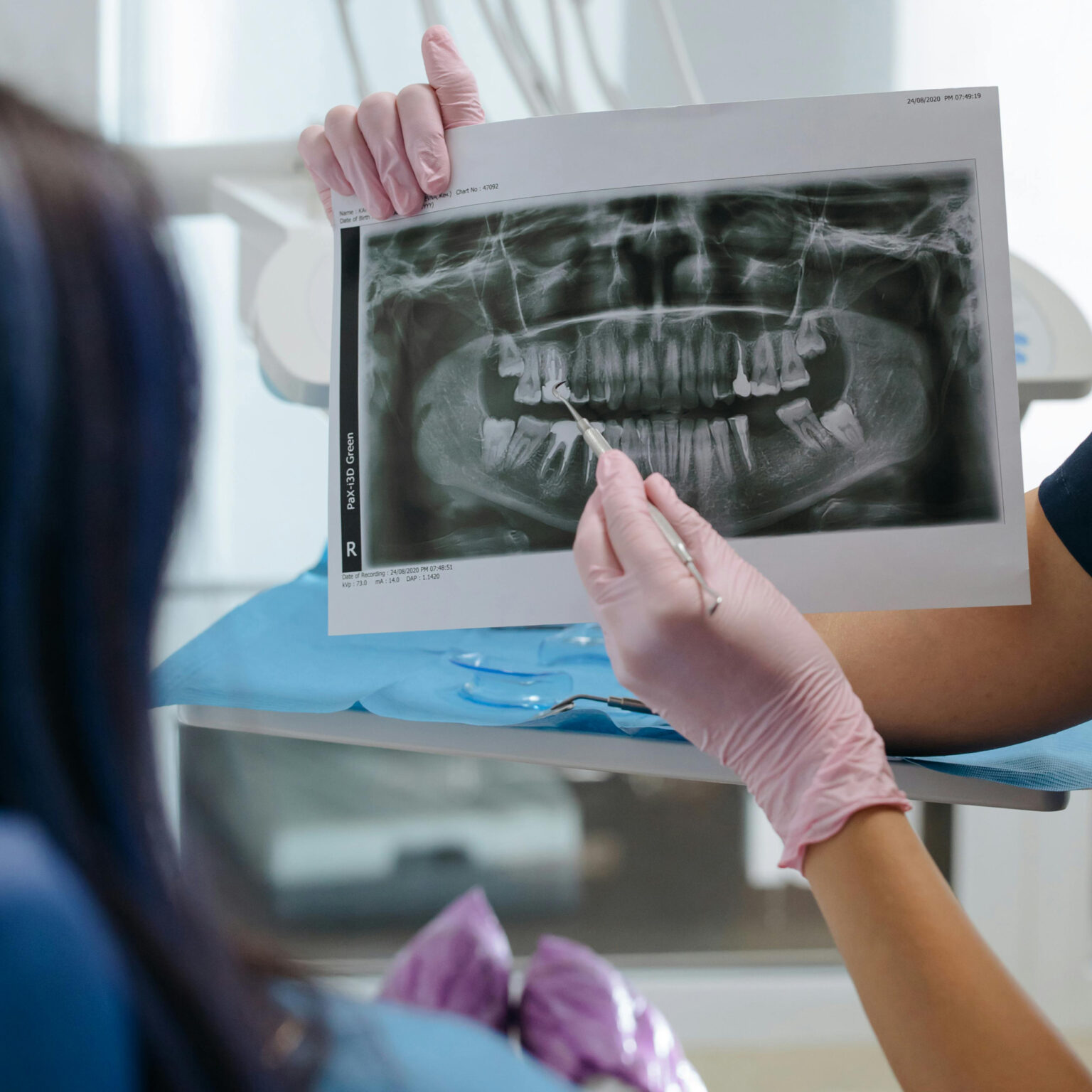
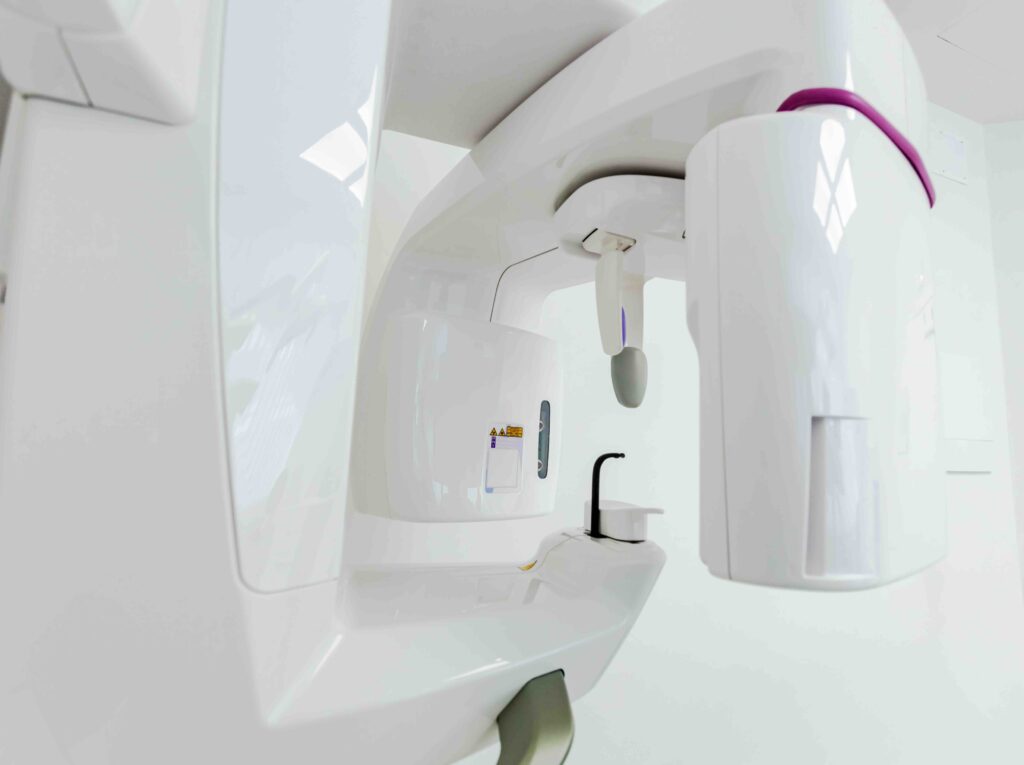
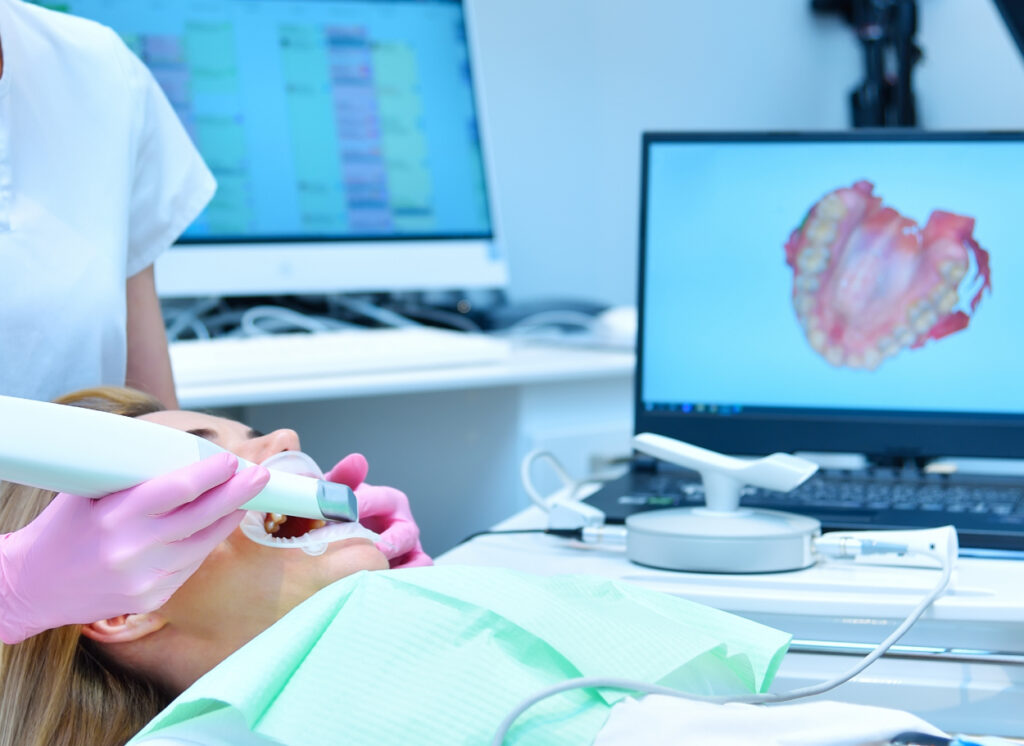
A recommendation for bone grafting usually comes from clinical findings and imaging, not guesswork. A careful exam, digital scans, and often a CBCT scan reveal the height, width, and contours of the bone. This allows the dentist or specialist to decide whether grafting is needed, how much is needed, and when it should be done.
The most common types of bone grafting around implants
There is no single grafting procedure. The technique depends on the defect.
Socket preservation is one of the most common. Right after a tooth is removed, graft material is placed into the socket to reduce collapse during healing. This is especially useful when the outer bone wall is thin, which is common in the front of the mouth.
Ridge augmentation is used when the jaw has already narrowed or lost height. The surgeon adds grafting material to rebuild the ridge so it can support an implant in a better position.
A sinus lift, often called sinus augmentation, is performed in the upper back jaw when the sinus floor sits too low and there is not enough vertical bone for an implant. The membrane lining the sinus is gently elevated, and graft material is placed beneath it to create more available height.
In some cases, minor grafting is done at the same time as implant placement. This may involve filling small gaps around the implant or repairing a localized defect. In other cases, the site needs to heal first before implants can be placed safely.
The graft material itself, and why the choice matters
Patients often ask, “What is the graft made of?” That is a fair question, and the answer depends on the case and the clinician’s judgment. Common options include the patient’s own bone, donor-derived bone processed for safety, animal-derived mineral matrix, and synthetic materials. Membranes are also frequently used to protect the site and guide bone regeneration.
Each option has trade-offs. A patient’s own bone has strong biologic properties, but harvesting it adds another surgical step. Some processed graft materials hold space very well, which is useful in preserving shape. Synthetic materials can be useful in certain applications. There is no universal best choice for every patient.
Good treatment planning balances biology, defect size, timing, stability, and the final restorative goal. A small extraction socket in a healthy patient may need a very different approach than a large defect in the esthetic zone or a posterior sinus case. This is where experience matters. The same words, “bone graft,” can describe procedures with very different complexity.
Timing, immediate implants, and when waiting is smarter
A common question in implant consultations is whether the tooth can be removed and the implant placed the same day. Sometimes yes. Sometimes that is an excellent option. Sometimes it is rushed and unwise.
Immediate implant placement can work well when infection is controlled, the surrounding bone walls are largely intact, primary stability can be achieved, and the soft tissue conditions are favorable. It can reduce treatment time and help preserve anatomy. Still, placing an implant immediately is not automatically better. If the socket is damaged, if there is significant bone loss, or if the implant would need to be angled poorly just to catch available bone, graft first and place later is often the more predictable path.
This is one of those moments where patients benefit from a clinician who is not trying to force every case into the same template. Faster is appealing. Predictable is better.
What the healing process usually feels like
Bone grafting sounds more dramatic than it usually feels. Most patients do not describe it as painless, but they also do not describe it as nearly as bad as they feared. The experience depends on the size and location of the graft, whether a tooth was extracted at the same visit, whether an implant was placed simultaneously, and individual healing patterns.
Typical post-operative symptoms include soreness, swelling, and some bruising for several days. A sinus graft can create a different kind of pressure sensation than a socket graft. The front of the mouth may feel tender and look swollen longer than patients expect because it is more visible and delicate. Most people manage well with prescribed or recommended medications, soft foods, and a few days of caution.
The larger issue is not pain. It is patience. Bone needs time to mature. In a simple socket preservation case, a few months may be enough before implant placement. In larger grafting cases, healing can take longer. This waiting period is not lost time. It is the stage where the site becomes strong enough to support what comes next.
How grafting affects the final appearance
People often focus on the implant as the hero of the story, but in visible areas the bone and gums do just as much work. If the ridge collapses after tooth loss, the gums lose support. Even a well-integrated implant can end up looking too long, too narrow, or poorly blended with neighboring teeth if the supporting architecture is deficient.
Bone grafting helps preserve or recreate the shape under the gums. That becomes especially important for front teeth, where tiny asymmetries are noticeable. Restoring a central incisor is rarely just about placing a titanium fixture in bone. It is about supporting the gum line, the papillae between teeth, and the facial contour so the crown looks like it belongs there.
Patients who have seen an implant that looked gray at the gumline or sat in a hollowed-out ridge understand this immediately. Functional success matters, but cosmetic success depends heavily on the quality of the hard and soft tissue foundation.
Bone grafting and long-term implant stability
When implants fail early, people sometimes assume the implant itself was defective. Much more often, the problem relates to biology, planning, healing, or forces placed on the implant. Insufficient bone volume is a major risk factor because it limits how securely the implant can be positioned and integrated.
A strong grafted foundation can improve implant stability in several ways. It allows the implant to be placed where the final tooth should be, not merely where remnant bone exists. It provides better support around the implant body. It can help distribute biting forces more evenly. It also supports the gum tissue, which plays a role in keeping the area clean and sealed over time.
That does not mean grafting guarantees success. Smoking, uncontrolled diabetes, untreated periodontal disease, grinding habits, poor oral hygiene, and skipped maintenance can still compromise outcomes. Bone grafting solves one part of the problem. The rest still depends on case selection, surgical execution, restoration design, and patient habits.
Questions patients in Calabasas often ask
Patients exploring Dental Implants Calabasas CA tend to ask practical questions before technical ones. They want to know whether the graft is truly necessary, how long treatment will take, what recovery is like, and whether the extra procedure is worth the cost.
Those are reasonable concerns. A useful consultation should explain not only what is being proposed, but what happens if it is skipped. In some cases, the answer is that the implant cannot be placed at all without grafting. In others, the implant could be placed, but the position, longevity, or appearance would be compromised. Patients deserve that distinction.
Local lifestyle factors also influence planning more than people realize. In a community where patients are active, work-facing, and often concerned about esthetics, preserving the ridge and gum architecture has real value. People want to chew comfortably, of course, but they also want results that look refined and age well.
Cases where grafting may be minimal, and cases where it is not
A patient in their thirties who breaks a premolar and treats it promptly may need only a modest socket graft or perhaps no graft at all if conditions are ideal. The process can be surprisingly straightforward. On the other hand, a patient who has worn a partial denture for years may have significant ridge loss that requires staged rebuilding before implants can be restored properly.
This difference matters because treatment timelines and budgets vary. It is easy to hear the phrase “bone graft” and assume every case is extensive. That is not accurate. Some grafts are small additions that protect future options. Others are reconstruction procedures that deserve specialist-level planning and a slower timeline.
The best consults are honest about this range. They do not oversell complexity when it is not needed, and they do not minimize it when the anatomy is challenging.
A few signs that bone support may need close evaluation
Sometimes patients can guess that bone loss is present before imaging confirms it. Common clues include:
- A tooth has been missing for years and the area looks sunken.
- A denture or flipper feels loose because the ridge seems flatter than before.
- Gum disease has already caused shifting teeth or visible recession.
- An extraction site healed unevenly after infection or trauma.
- The upper back jaw feels limited because of sinus proximity discussed in prior exams.
These signs do not prove a graft is required, but they often justify a careful Dental Implants Calabasas CA implant workup with three-dimensional imaging.
Choosing the right provider for implant and grafting treatment
Bone grafting is technique-sensitive. So is implant placement. The planning between them matters as much as the procedures themselves. For that reason, patients should look for a provider who thinks restoratively, not just surgically. The end goal is not simply to put bone in the site or place metal in the jaw. The goal is a tooth replacement that is stable, cleanable, comfortable, and natural in appearance.
A good evaluation usually includes a review of health history, examination of gums and bite, digital imaging, and a realistic discussion of timing. Providers should be able to explain whether the graft will be done at extraction, before implant placement, or at the same time as the implant. They should also address whether temporary tooth replacement is needed during healing.
This is one area where shortcuts create expensive problems later. A poorly planned graft can leave too little contour. A poorly positioned implant can force a compromised crown. A rushed timeline can sacrifice integration. By contrast, a measured approach often saves patients frustration Dental Implants Calabasas CA even if it asks for more patience up front.
The cost question, and how to think about value
Bone grafting adds cost, and it is fair to acknowledge that directly. No patient should be made to feel superficial or difficult for asking about fees. The better way to frame the issue is value over the life of the implant restoration.
If a graft materially improves implant positioning, gum support, and long-term stability, it is not an optional add-on in the way people sometimes imagine. It is part of building the case correctly. Skipping it to save money can lead to a weaker result, additional surgeries later, or restoration compromises that become obvious every time the patient smiles or chews.
That said, not every recommended graft carries the same urgency. Some are essential. Some are strongly beneficial but more elective from an esthetic standpoint. An experienced provider should help patients understand where their case sits on that spectrum.
What successful treatment usually looks like
When bone grafting is done well, the result is often invisible, and that is exactly the point. The patient notices that the implant feels solid, the crown emerges naturally from the gumline, food does not trap excessively, and the area does not look collapsed. Over time, maintenance becomes routine rather than stressful.
The most successful implant cases rarely feel dramatic once completed. They simply feel normal. Patients forget which tooth was replaced. They stop chewing on one side. They smile in photos without editing their expression around a missing space. That kind of normalcy is the outcome people are really paying for.
Bone grafting often plays a quiet but essential role in getting there. For patients considering Dental Implants Calabasas CA, understanding that role can make the entire process less mysterious. The implant may be the visible finish, but the graft is often the reason that finish holds up, looks right, and functions the way it should for years to come.
Oaks Dental
5000 Parkway Calabasas, Suite 308
Calabasas, CA 91302, United States
Phone: +1 (818) 412-8349
FAQ About Dental Implants Calabasas CA
How much does a dental implant cost in California?
Costs vary with the number of teeth replaced, restoration type, imaging, and any extractions or bone grafting. Request an itemized estimate after an examination; a single advertised price may not include every treatment stage.
Can people with autoimmune disease get dental implants?
Some people may qualify, but the condition, medications, oral health, and healing risks require individual assessment. Share your medical history with your dentist, who may coordinate with your treating physician.
Can you have dental implants if you have osteopenia?
Osteopenia does not by itself establish whether implants are suitable. Your dentist must evaluate jawbone support and review bone-related medications and other risks before recommending treatment.
Corrections
Spot something wrong? Send it to the desk and it gets fixed in the open.