Why Dental Implants in Calabasas CA Are Worth the Investment
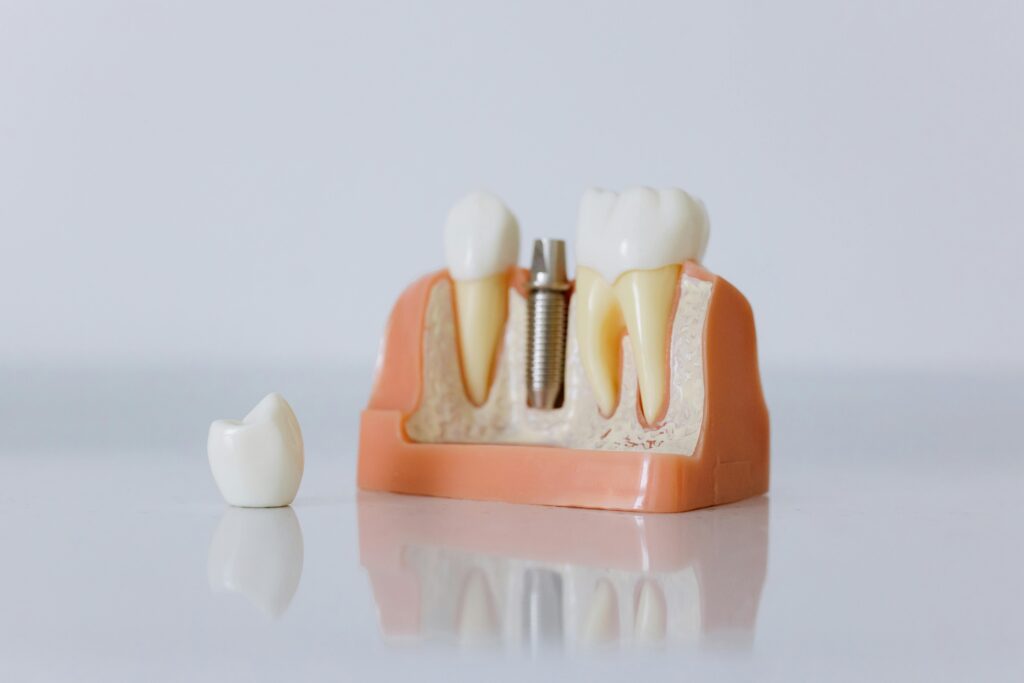
Losing a tooth changes more than a smile. It affects the way food feels, the confidence to speak freely, and often the small social moments people stop noticing only after something is missing. A patient might first complain about a gap in a visible area, but after a longer conversation the real frustrations usually surface: chewing on one side, avoiding steak or apples, smiling with a hand near the mouth, or feeling self-conscious in work meetings. Those quality-of-life issues are exactly why so many people begin looking seriously at Dental Implants Calabasas CA.
The word "investment" matters here. Dental implants are not the cheapest tooth replacement option, and any honest discussion should start there. They usually cost more upfront than a bridge or removable partial denture. They also require planning, healing time, and a dentist or specialist who understands both surgical precision and aesthetic detail. Yet when you look at longevity, comfort, bone preservation, and daily function, implants often become the most practical long-term decision, especially for adults who want a stable result that feels close to a natural tooth.
In a place like Calabasas, where patients often have active personal and professional lives, expectations are high. People do not just want a tooth-shaped object. They want something that looks natural under daylight, holds up at dinner, photographs well, and does not remind them every day that they had dental work. A well-placed implant can do that in a way few alternatives can.
The real cost of doing nothing
A missing tooth is rarely a static problem. Teeth are part of a system, and when one is lost, the rest of the mouth adapts, often in unhelpful ways. Nearby teeth can begin to drift into the open space. The opposing tooth may over-erupt because it no longer has a partner to bite against. Bite forces shift. Some people develop uneven wear, jaw soreness, or food traps that were not there before.
Then there is bone loss. This is one of the least understood parts of tooth loss, yet it is one of the most important. Natural tooth roots stimulate the jawbone during chewing. Once a root is gone, that stimulation drops off, and the body slowly resorbs the bone in that area. It does not happen overnight, but over the years it can change facial support and complicate future treatment. In the front of the mouth, especially, bone shrinkage can affect both appearance and the ability to create a lifelike replacement later.
I have seen patients postpone care because the missing tooth "was in the back" and not visible. Five or seven years later, the conversation is different. What could have been a more straightforward implant case may now require bone grafting, sinus work, or a more involved restorative plan. The longer the space sits empty, the less simple it tends to become.
Why implants feel different from other options
An implant replaces the root as well as the visible crown. That changes everything about how the tooth functions. A bridge relies on neighboring teeth for support. A removable denture rests on the gum and may shift under pressure. An implant is anchored in bone, so when treatment is done well and the final crown is shaped properly, it tends to feel more secure and intuitive.
Patients often describe the difference in practical, everyday terms. They say they stop thinking about the missing tooth. They chew without testing the area first. They do not worry that something will move while speaking. Those comments may sound simple, but they are exactly what good restorative dentistry aims for: less mental friction in daily life.
That said, implants are not magic. They still need excellent planning and maintenance. Gum health matters. Bite design matters. The final esthetics depend on more than just placing a titanium post. The shape of the gums, the thickness of the tissue, the contour of the crown, and the shade matching all contribute to whether the result disappears naturally into the smile or looks noticeably artificial.
What makes the investment worthwhile over time
People often compare the sticker price of a dental implant to the price of a bridge and stop there. That is understandable, but it can be misleading. A better comparison looks at the entire life cycle of treatment.
A bridge may cost less initially, but it generally requires preparing adjacent teeth, even if those teeth are otherwise healthy. Those supporting teeth can later need retreatment, crowns, root canal therapy, or replacement of the bridge itself. A removable partial denture can be useful in selected cases, but it comes with compromises in comfort, retention, and chewing efficiency. It also does not prevent bone loss in the way an implant can.
Implants, by contrast, often preserve what is there. If one tooth is missing and the neighboring teeth are healthy, an implant lets those teeth remain untouched. For many patients, that is one of the strongest arguments in favor of the procedure. Dentistry is often about preserving healthy structure whenever possible. An implant can support that principle beautifully.
Here is where the value becomes clearer:
- It replaces the missing tooth without grinding down healthy adjacent teeth.
- It helps maintain bone in the area by restoring root-like stimulation.
- It offers strong chewing stability for most common foods.
- It can last many years with proper planning, hygiene, and follow-up care.
- It often feels more natural in daily function than removable alternatives.
None of those points means every implant lasts forever. That would be an overstatement. Success depends on biology, technique, oral hygiene, smoking status, systemic health, and regular maintenance. But when patients ask why implants are considered such a strong long-term option, these are the reasons.
Calabasas patients often want more than basic tooth replacement
Aesthetics carry particular weight in communities where professional presentation and personal appearance matter. Calabasas is full of people who spend time in front of clients, cameras, colleagues, or social circles where confidence is part of daily life. That does not mean treatment should be vanity-driven. It means the standard for natural-looking dentistry is high, and rightly so.
Front-tooth implants illustrate this well. Replacing a single front tooth is often more demanding than replacing a back tooth, even though it seems smaller and simpler. The dentist has to consider smile line, lip support, gum symmetry, translucency, and how light reflects off the restoration. A crown that looks fine on a model can look flat or opaque in a real smile if these details are missed. In the esthetic zone, experience matters tremendously.
Back-tooth implants matter just as much, though for different reasons. Molars absorb heavy chewing forces. If a missing molar is left unrestored, the bite can become unstable over time. Patients sometimes tolerate this for years, then notice headaches, clenching patterns, or fractured fillings elsewhere. Rebuilding posterior support with implants can improve comfort in ways they did not expect.
This is one reason searches for Dental Implants Calabasas CA are often driven by more than appearance. The demand is usually a mix of function, durability, and esthetics, all rolled into one decision.
The treatment process is more deliberate than people expect
One of the biggest misconceptions is that implants are just "screws placed in the jaw." That description is technically incomplete and clinically misleading. Successful implant care starts long before surgery. It begins with diagnosis.
A proper evaluation should include the health of the gums, the condition of neighboring teeth, the quality and volume of bone, bite relationships, medical history, and patient habits such as grinding or smoking. In many offices, three-dimensional imaging helps determine whether there is enough bone and where important anatomical structures sit. The implant size, angle, depth, and restorative plan should all be considered before treatment starts.
Healing also requires patience. In some cases, an implant can be placed soon after tooth removal. In others, the site needs time to heal first. Some patients need bone grafting to rebuild lost volume. Some need temporary restorations while the implant integrates. There is no single timeline that fits everyone, and that is a good thing. Personalized planning usually leads to better outcomes than a rushed one-size-fits-all approach.
Patients are often relieved to learn that implant procedures are frequently easier than they feared. Many compare the experience favorably to a difficult extraction. With local anesthesia and, when appropriate, sedation options, discomfort is generally manageable. The more significant challenge for most people is not the surgery itself but the waiting involved in doing the case properly.
When the higher price is justified, and when it may not be
Professional judgment means acknowledging that implants are not the right answer for every person at every moment. If someone has uncontrolled periodontal disease, unstable diabetes, severe smoking habits, or poor oral hygiene, placing an implant without addressing those issues first can be a mistake. If the bone is inadequate and the patient is not willing to undergo grafting, an implant may not be realistic at that time. If finances are tight and another option will restore essential function safely, that alternative deserves honest discussion.
Still, there are many cases where the higher upfront cost is justified because the treatment aligns with the patient's goals and oral health needs. A healthy adult missing a single tooth with strong adjacent teeth is a classic example. So is a person frustrated by a lower denture that moves constantly. So is someone replacing a failing tooth that has poor long-term prognosis but wants a stable, natural-feeling result.
The best clinicians do not sell implants as status dentistry. They recommend them when implants solve the problem more predictably and preserve more of the mouth over time.
The hidden value of bone preservation
If there is one benefit that tends to be overlooked, it is bone maintenance. People understand crowns because they can see them. They understand dentures because they can remove them. Bone biology is less visible, so it often gets little attention in casual conversations about replacing teeth.
Yet preserving bone affects both present comfort and future options. When bone volume shrinks, gum contours flatten and support diminishes. In the upper front, this can create dark spaces and esthetic compromises. In the posterior maxilla, sinus expansion can reduce available bone height. In the lower jaw, long-term resorption can influence denture fit and stability. An implant is not a guarantee against every change, but it does help maintain the function of the bone in ways that bridges and removable appliances generally do not.
For younger patients especially, that matters. A forty-five-year-old replacing a tooth may live with the result for decades. Thinking only in terms of next year's budget and not the next twenty years can become expensive later.
Maintenance is simple, but not optional
Some marketing around implants has given patients the idea that once the implant is placed, the problem is permanently solved. That is too simplistic. Implants can fail. They can develop peri-implant inflammation if plaque control is poor. Crowns can chip. Screws can loosen in some cases. Bite forces can create complications if grinding is left unmanaged.
The good news is that most of these risks are manageable with the right habits and follow-up care. Patients who do well long term are usually the ones who treat implants with the same or greater respect than natural teeth. They keep recall appointments. They brush carefully at the gumline. They clean between teeth daily. If they clench or grind, they wear the recommended nightguard.
A brief patient checklist is often helpful here:
- Keep regular hygiene and exam visits, even if the implant feels perfect.
- Clean around the implant daily with the tools your dentist recommends.
- Report bleeding, soreness, or a change in bite early, not months later.
- Use a nightguard if you grind or clench.
- Avoid smoking if you want the best chance of long-term success.
That kind of maintenance is not burdensome, but it does matter. The implant itself cannot decay, yet the surrounding tissues can absolutely become unhealthy if neglected.
Experience and planning matter more than brand names
Patients sometimes focus heavily on the type of implant system used, and while quality components matter, they are rarely the deciding factor by themselves. What matters more is diagnosis, case selection, implant positioning, restorative design, tissue management, and follow-up care.
A beautifully engineered implant placed in the wrong position will still create problems. A crown with poor contours can trap plaque and inflame the gum tissue. A patient with untreated gum disease can compromise an otherwise well-done surgical result. On the other hand, a carefully planned case with thoughtful execution and realistic expectations often performs very well for years.
That is why consultations should feel thorough, not rushed. Patients should understand whether they need grafting, how long healing may take, what the temporary phase will look like, and what the total cost includes. They should also hear the downsides clearly. Any office promising a universally quick, effortless, perfect result is oversimplifying a treatment that deserves nuance.
One tooth, several teeth, or a full arch, the value equation changes but the logic stays the same
For a single missing tooth, implants are often easiest to appreciate because the comparison is straightforward. Either prepare the neighboring teeth for a bridge, wear a removable solution, or place an implant that stands on its own.
For multiple missing teeth, implants can support larger restorations without requiring a separate implant for every tooth in every case. That can improve stability while keeping the treatment efficient.
For full-arch tooth loss, implants can be life-changing. Patients who have lived with a loose lower denture know exactly how limiting that can be. The ability to speak more confidently, chew more effectively, and avoid adhesives can make implant-supported full-arch care feel less like elective dentistry and more like reclaiming normal life. The investment is higher, certainly, but so is the functional return.
Financing, timing, and the practical side of the decision
Even when patients understand the value, cost remains real. That should not be minimized. Treatment plans have to fit budgets, insurance realities, and family priorities. A thoughtful office helps patients understand staged treatment, financing options, and where it makes sense to act sooner rather than later.
Sometimes the best decision is to extract a failing tooth, preserve the site, and plan the implant in stages. Sometimes doing the implant immediately is feasible and more efficient. Sometimes a temporary partial is used while healing occurs. These are not compromises in quality if planned properly. They are part of adapting ideal dentistry to real life.
The practical question is not simply, "Can I spend this amount right now?" It is also, "What happens if I delay, and what will the alternative cost me over time?" For many people, that broader view shifts the decision. They begin to see an implant less as a premium add-on and more as a durable, health-conscious restoration.
Why many patients say the investment was worth it
When patients look back after a successful implant case, they rarely talk first about titanium, osseointegration, or even the procedure itself. They talk about eating comfortably at a restaurant without thinking about the missing tooth. They talk about smiling in photos again. They talk about forgetting the restoration is there, which in dentistry is often the highest compliment.
That does not mean the path is effortless. There may be imaging, a graft, several appointments, temporary restorations, and healing periods that Oaks Dental Dental Implants Calabasas CA test patience. There is also financial commitment. But worthwhile care often asks for both patience and perspective.
Dental implants are worth the investment when they are chosen for the right reasons, placed with skill, and maintained responsibly. In a community where people value longevity, appearance, and daily confidence, it makes sense that interest in Dental Implants Calabasas CA continues to grow. At their best, implants do more than fill a space. They restore function, preserve structure, and give patients back a sense of ease that cheaper short-term options often cannot match.
Oaks Dental
5000 Parkway Calabasas, Suite 308
Calabasas, CA 91302, United States
Phone: +1 (818) 412-8349
FAQ About Dental Implants Calabasas CA
How much does a dental implant cost in California?
Costs vary with the number of teeth replaced, restoration type, imaging, and any extractions or bone grafting. Request an itemized estimate after an examination; a single advertised price may not include every treatment stage.
Can people with autoimmune disease get dental implants?
Some people may qualify, but the condition, medications, oral health, and healing risks require individual assessment. Share your medical history with your dentist, who may coordinate with your treating physician.
Can you have dental implants if you have osteopenia?
Osteopenia does not by itself establish whether implants are suitable. Your dentist must evaluate jawbone support and review bone-related medications and other risks before recommending treatment.
Corrections
Spot something wrong? Send it to the desk and it gets fixed in the open.